
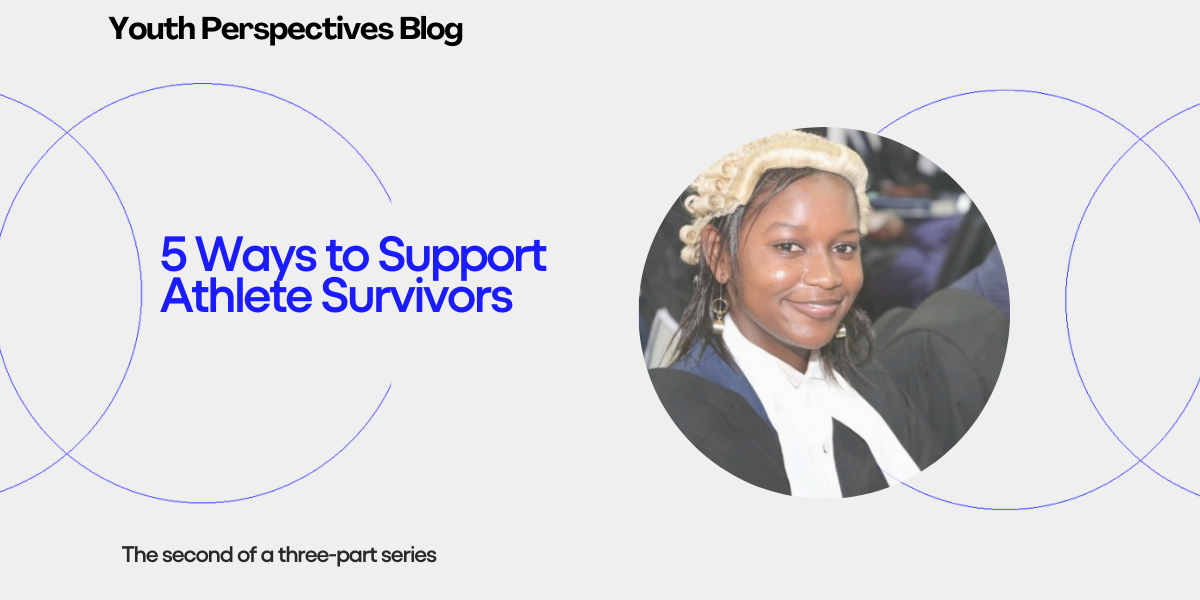
Supporting athlete-survivors when they disclose their experiences of harassment and abuse is vital, and their well-being must be centred at all times. Failure to do so correctly can cause survivors to feel isolated, silenced, and even retraumatised. Support is also needed before disclosure, and at all stages of the process. In this article, Kenyan sports laywer and safe sport advocate Caroline Mwanzia provides 5 actionable steps that sports coaches, authorities and allies can take to create safer, more supportive environments for survivors in their communities.
This is the second article of a three-part series by Caroline. Read her previous article on advocating for safe sport in Kenya.
5 Things Sports Organisations, Coaches and Allies Can Do to Support Athlete-Survivors
Read on to find out how to support athlete-survivors in your life.
1. Believe Them
One of the best initial supports that survivors of abuse need from everyone is to be told ‘I believe you’. This is the first step of offering them support. Survivors are often dismissed, patronized or blamed. It’s therefore essential to listen without judgement and let them know that they are safe with you.
2. Offer Counselling Sessions
Counselling sessions are necessary for survivors of abuse, who may be dealing with complex and long-standing trauma. Therapy and counselling sessions can help survivors to process their trauma, get back to their lives and being to heal. Safe Sport International provides valuable information on mental health and wellbeing in sports, designed specifically for athletes in need of support.
3. Create Safe Spaces
When survivors are isolated and without support systems, it leaves them in an extremely vulnerable situation. Some are even fearful for their lives and the safety of their loved ones. Therefore, I would like to see sports entities providing or partnering with safe spaces and shelters for survivors of abuse, where they could stay in comfort and safety without the risk of further harm.
4. Train Support Staff, Athletes & Coaches
Training in the best practices on how to offer support and intentional listening to the survivors of abuse is essential. Let everyone else who would like to offer support be trained in the best way to handle vulnerable survivors and what to say and not say to them. It’s important to have a survivor-centred and trauma-informed approach, to reduce the risk of retraumatisation. For those who are interested in learning how to become trauma-informed, The Army of Survivors is a valuable resource.
5. Provide Pro Bono Legal Services
Sports federations can support survivors of abuse by offering pro bono legal services, through either having an in-house pool of pro bono lawyers or connecting with external legal service providers. Representation is needful in such circumstances and survivors deserve as much help as they can obtain, legally.
Where to Get Help in Kenya
While there is currently no dedicated entity for reporting cases of abuse in Kenyan sports, Healthcare Assistance Kenya provides a free 24-hour hotline for all reports of gender-based violence. Anyone seeking support services can call 1195 for rapid assistance, as well as referrals to medical aid, legal advisors and rescue centres.
About the Author

Caroline Mwanzia is a sports lawyer practicing in sports governance, anti-doping, safeguarding and sports research. She is also a licensed FIFA Football Agent and an ad hoc researcher at the Court of Arbitration for Sports (CAS). Caroline also has a Master’s in Sports Management and Legal Skills from ISDE, Barcelona and has obtained various certifications on integrity and safeguarding from FIFA, Biathlon Integrity Unit and World Athletics. She is a member of Women in Sports Law (WISLAW) and is particularly passionate about safe sport and clean sport.
Write for Us
The Safe Sport International Youth Perspectives blog welcomes contributors between the ages of 16 and 30. If you’d like to write an article, please fill in our contributor’s form.
Fill out our contributor form →
Articles and opinions published on the Safe Sport International Youth Perspectives Blog are the independent work of the authors. These contributions may not reflect the official stance of Safe Sport International and are published to spark conversations on safeguarding issues in sport.
Meet the Youth Perspectives Blog Team

Emma Thomas – SSI Trustee

Rupert Stebbings – Trustee

Melissa Causer – Intern

Jules Hourany – Intern

Thayz Figueirêdo – Intern
