
Content warning: This post contains references to sexual and psychological abuse
“Unless you reach a higher tennis ranking than I did, you cannot speak”. These are the words the coach who psychologically and sexually abused me for four years. His insults and acts of humiliation were rarely criticisms of my performance, but weapons designed to silence me and belittle me over everything – from losing a match to losing a phone charger.
Here lies a key component of the abuse of power: silencing the victim. With every insult and humiliation, his voice grew stronger, louder, harsher while mine shrank until I could no longer hear it. I became so silent, weighed down by shame and self-blame, that after the violence the only way I could hear my voice and feel myself being alive was by writing in my journal. Writing became my lifeline and my friend – a space where I felt safe enough to express my truth and dared to say what I could not express out loud.
It took me many years, but through writing, psychotherapy, yoga and the support of loved ones, I slowly began to reclaim my power and my voice. Finally, I could hear it again. Finally, I could recognize it as my own. This reclamation eventually led me to report the abuse to the Italian police, to share my story publicly and to advocate for safer sport with ChangeTheGame — the first Italian association to help those abused in sports contexts and advocate for safe sport. Reclaiming my long-forgotten voice was a key element of my healing journey, and I hope that sharing this story can help others raise their voices, too.
Although this process of reclaiming one’s power and voice after violence looks different for every survivor, daring to tell the truth and use our voices can be deeply liberating and a catalyst for change. However, this does not come without its challenges. The disclosure rate for violence in sport is still significantly low, with survivors facing numerous barriers for speaking out.
In this article, I offer some insights from a psychological perspective into these barriers and why speaking out can be so difficult for survivors. I also highlight the importance of trauma-informed practices when supporting survivors to allow their voices to be heard.
Barriers to Disclosure
Trauma and Language
Traumatic experiences such as violence affect the brain and the body in ways that make it difficult, and sometimes impossible, to speak about it. In ‘The Body Keeps the Score’, psychologist Bessel van der Kolk explains how trauma can shut down the language centre in the brain when a flashback is triggered, making it impossible to put thoughts and feelings into words. This means that sometimes it is not that survivors don’t want to talk about their experiences, but that they simply, physically cannot. Sometimes there are no words to express the horror we’ve been through. This is an important fact to keep in mind for those working in safeguarding as a significant barrier to disclosure. That is why trauma-informed practices such as creating safe spaces, being supportive and trustworthy are important for allowing the voice to come out when they are ready.
Navigating Internal Battles
Trauma not only affects the ability to speak out but also complicates the process of disclosing it. A recently published article by Woessner and colleagues on childrens’ experience of disclosing experience of violence in sport highlights how we think often the disclosing process as being linear: experiencing violence, disclosing to an adult: filing an official report, ending the violence. However, the reality is far more complex. Between the experience of violence and the decision to speak out, there are a lot of internal battles to cope with the unspeakable experience and factors that can decide whether a disclosure will happen.
Some key factors that play a role in this decision-making process include:
- Relationship with trusted adults: Survivors are more likely to disclose if they anticipate being supported and believed
- Perceived outcomes: Fear of losing everything like their place in the sport or team can prevent survivors from coming forward
- Individual recognition and environmental normalisation of violence: Sometimes survivors struggle to identify that what they experience was violence, especially if those behaviors are normalized in their sport environment.
What stood out to me the most from this article is the importance of perceived support survivors think they will receive from the adult they disclose to. For a survivor to come out and to be able to speak the unspeakable, they need to have the certainty that who they are disclosing it to will be supportive and reassuring, rather than dismissive, diminishing or, even worse — blaming them.
Key Takeaways:
- Voice breaks the cycle of silence: Reclaiming one’s voice has the power to not only to be a catalyst for change in one’s personal story, but also to disrupt the silence surrounding violence in sport.
- Trauma-informed practices are essential for safe sport: Creating a safe, trustworthy and empowering environments not only is foundation for preventing violence, but it can help survivors break the silence.
- Support matters to disclosure: Being supportive and reassuring is crucial for those affected by violence to be able to talk about it.
Why I Speak Out
In the end, I did reach a higher ranking than he ever did, but that’s not why I get to speak. I speak because I can. I speak because I must. My voice has risen from its ashes and now I use it to advocate for safer sport environments and for those affected by abuse in sport. As more survivors reclaim their voices, my hope is that this will contribute to a broader cultural shift in sport – one where athletes can thrive in safe, supportive environments. It’s time for sport organizations to commit to trauma-informed practices, to listen and to put survivors’ voices at the centre of the discourse, and ensuring that every athlete’s voice can be heard, believed and elevated.
About the Author

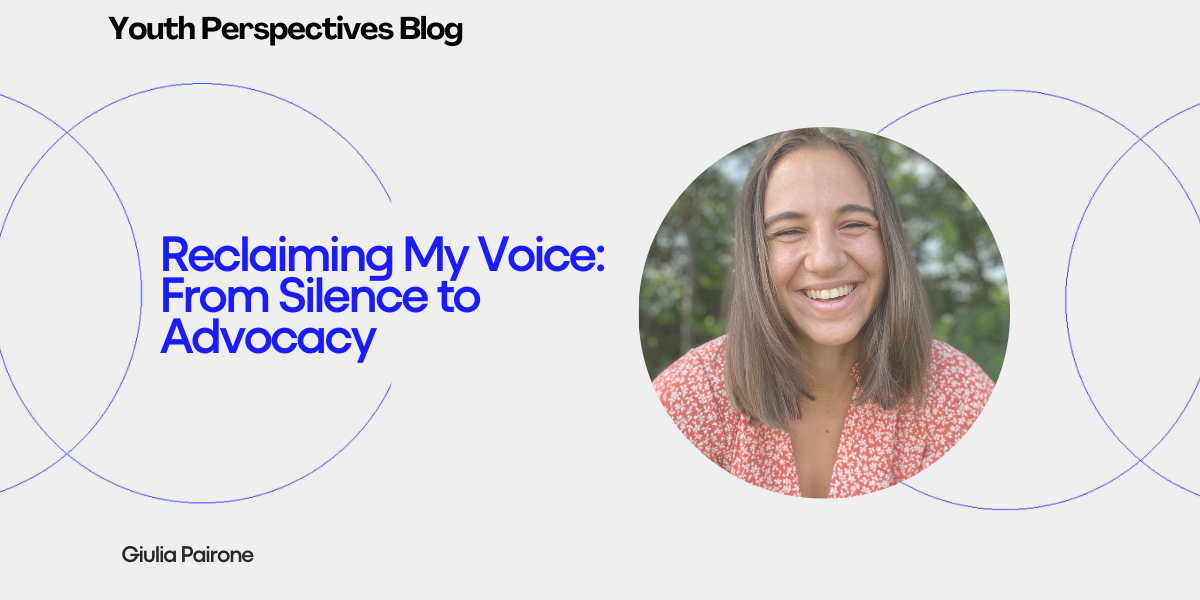
Giulia Pairone is a former professional tennis player, yoga teacher and a dedicated advocate for athletes’ safety and wellbeing with the Italian non-profit ChangeTheGame. After surviving violence as a young athlete, she has turned her experience into a driving force for raising awareness about violence in sport, pushing for policy change and supporting others in reclaiming their power and voice. With a master’s degree in Sport Psychology and another in progress in Work and Organizational Psychology, she blends her passion for leadership, wellbeing and flourishing to help create safer, more sustainable environments in both sport and the workplace.
Write for Us
The Safe Sport International Youth Perspectives blog welcomes contributors between the ages of 16 and 30. If you’d like to write an article, please fill in our contributor’s form.
Fill out our contributor form →
Articles and opinions published on the Safe Sport International Youth Perspectives Blog are the independent work of the authors. These contributions may not reflect the official stance of Safe Sport International and are published to spark conversations on safeguarding issues in sport.
Meet the Youth Perspectives Blog Team

Emma Thomas – SSI Trustee
