
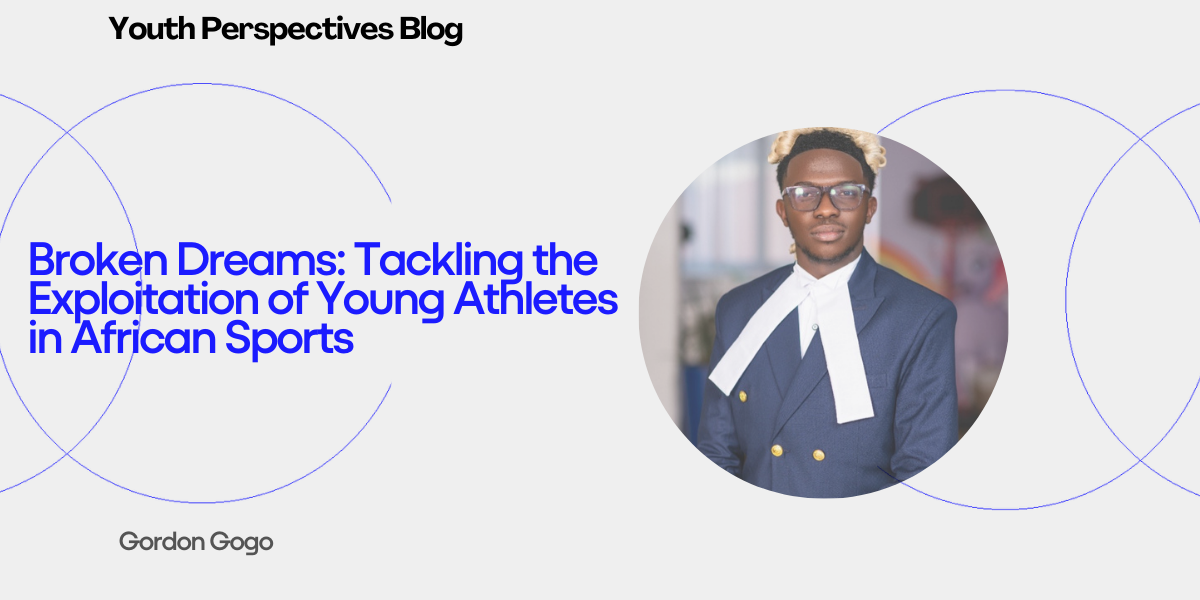
Sports lawyer Gordon Gogo is using law, technology, and advocacy in his mission to advocate for the protection and empowerment of youth athletes across Africa. In his newest article for our Youth Perspectives Blog, he tells a troubling story of exploitation of young athletes in African sports, enabled by deceptive agents, predatory coaches, and the overarching systems that leave them vulnerable to various forms of harm.
At the tender age of 12, Amad was approached by an individual posing as a football agent, promising trials with top European clubs. Trusting this opportunity, Amad’s family invested their savings, hoping for a brighter future for their son. When he arrived in Italy, the dream turned into a nightmare. Abandoned in a cramped apartment with other trafficked boys, he survived on scraps while his “agent” vanished with the money. Years later, Amad would defy the odds, signing for Manchester United in a £37 million deal. But his story is the exception. For every success like his, thousands of African boys and girls are discarded by a system that treats them as disposable commodities.
This harrowing tale is not unique. The United Nations Commission on Human Rights reported in 2009 that a “modern slave trade” is being created with young African players. These young athletes driven by aspirations face abandonment, exploitation, and shattered dreams.
How Young Athletes Are Exploited in African Sports
Unscrupulous agents and fake academies prey on the desperation of young athletes and their families. They promise trials, scholarships, or professional contracts in exchange for hefty fees. Many families sell land or empty their savings, only for their children to end up stranded abroad with no legal protection or way home. Others sign exploitative contracts that strip them of earnings and career control. Even those who stay in domestic leagues face abuse.
Young players are often forced to play through injuries, denied education, and subjected to harsh training conditions. Physical and emotional abuse is rampant, with coaches pushing athletes beyond their limits or treating them as disposable. The power imbalance silences victims, leaving lasting trauma. Sexual abuse is another dark, underreported reality, especially for young female athletes. Predatory coaches or officials manipulate and harm them, with no clear reporting structures to seek justice. Victims often suffer in silence, fearing retaliation or the end of their careers.
Why Are Young Athletes So Vulnerable, and What Is the Impact of Their Exploitation?
- Poverty and Desperation: In many African communities, families struggling with financial hardship see sports as the only way out. This desperation makes young athletes, and their parents easy prey for fake agents and unscrupulous recruiters who promise professional contracts in exchange for hefty fees.
- Lack of Regulation: Few African nations have strict policies governing youth scouting, athlete representation, or club operations. This lack of oversight allows unethical academies and agents to operate freely, often without any accountability.
- Cultural Pressures: In many societies, family and community expectations push young players into risky situations. Promising young athletes are often encouraged to drop out of school and focus entirely on their sport, ignoring the potential dangers and lack of fallback options if their careers don’t succeed.
The Impact of Exploitation on Young Athletes
- Lost Childhoods: Many trafficked or exploited athletes are forced to abandon their education, focusing solely on their sport, only to be discarded when they don’t make the cut. Without formal education, their chances of securing stable employment later in life are severely diminished.
- Mental Health Issues: The trauma of exploitation can leave lasting scars. Anxiety, depression, and PTSD are common among athletes who have been deceived, abused, or abandoned by those they trusted.
- Increased Risk of Homelessness and Crime: Many young athletes who are trafficked abroad or dropped by unscrupulous clubs end up stranded in foreign countries or back home with no support system. Some turn to crime for survival, while others struggle with homelessness, unable to reintegrate into society.
How Can We Safeguard Young Athletes?
- Regulate Agents and Scouts: Implement strict licensing and background checks to ensure only verified professionals work with young talent. Enforce FIFA regulations on youth transfers to deter trafficking.
- Educate Athletes and Families: Teach young athletes about contract laws, financial literacy, and their rights. Train families to identify fake agents and exploitative schemes.
- Legal and Government Interventions: Criminalize child trafficking in sports and prosecute offenders. Establish rescue programs for stranded athletes.
- Leverage Technology: Platforms like Mchezaji can verify scouts, monitor athlete progress, and ensure transparency in player data management.
A Call to Action for Safeguarding Young Athletes
The dream of becoming a professional athlete should be one of hope and opportunity, not one tainted by fear, exploitation, or broken promises. Yet, for too many young talents in Africa, the path to success is riddled with deception, abuse, and systemic failures that leave them vulnerable to harm. Without proper regulation, education, and legal safeguards, these aspiring athletes risk losing not just their careers, but also their safety and future.
Through my work as a sports lawyer and advocate, I am committed to fighting these injustices by pushing for better regulations, ethical scouting practices, and strong legal protections for young athletes. I have seen firsthand how flawed systems allow exploitation to thrive, and I am dedicated to challenging these loopholes to create a safer environment for all athletes. This mission is also what drives me to develop Mchezaji, a digital platform designed to safeguard athletes in the modern sports industry. By providing verified scouting opportunities, ensuring transparency in player data management, and educating young athletes on their rights, Mchezaji is not just a scouting tool, it is a shield against exploitation. It aims to give players control over their careers while providing visibility to ethical scouts, clubs, and agencies that truly value their talent.
However, this is a fight that requires collective effort. Governments must enforce stricter regulations, federations must hold scouts and agents accountable, and the entire sporting community must prioritize athlete welfare over profit. By raising awareness, implementing strong policies, and embracing technology, we can create a world where young athletes are protected, nurtured, and given the fair opportunities they deserve.
About the Author

Gordon Gogo is a sports lawyer practicing in litigation, sports management, sports research, artificial intelligence, and sports governance, with certifications in Artificial Intelligence and the Law, Data Analytics in Sports, Data Protection and Arbitration. He is a Member of the Young African Leaders in Sport and a pioneer in Phygital Sports. As the Founder of Mchezaji, a sports data analytics platform, he is dedicated to leveraging technology to enhance athlete performance , scouting, team management and spectators’ experience. Gordon will pursue his Master’s in International Sports Law at ISDE in 2026, further solidifying his expertise in the evolving landscape of global sports governance.
Write with Us
The Safe Sport International Youth Perspectives blog welcomes contributors between the ages of 16 and 30. If you’d like to write an article, please fill in our contributor’s form.
Fill out our contributor form →
Articles and opinions published on the Safe Sport International Youth Perspectives Blog are the independent work of the authors. These contributions may not reflect the official stance of Safe Sport International and are published to spark conversations on safeguarding issues in sport.
Meet the Youth Perspectives Blog Team

Emma Thomas – SSI Trustee
